Conserving & Connecting Nature
 by
Elvida Sydney
· · 6 min read
by
Elvida Sydney
· · 6 min read

iNaturalist is a community science platform and social network where you photograph the plants, animals, and fungi you find in your garden, your neighbourhood, or wild open spaces and upload them to the iNaturalist open-access biodiversity database. Built-in computer vision and a global network of experts help you identify what you’ve seen. Scientists worldwide rely on it to track invasive species, monitor species of conservation concern, and map how climate change is reshaping ecosystems. Its three goals are to connect people with nature, advance biodiversity science, and protect habitats and at-risk species.
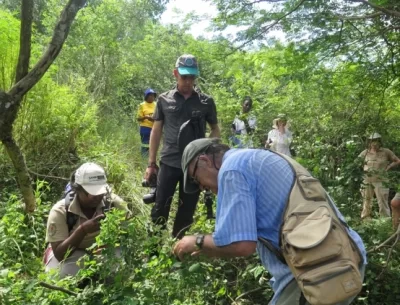
Suvarna is SANBI's citizen science manager and the focal point for iNaturalist in southern Africa, where she coordinates the City Nature Challenge and Great Southern BioBlitz and works to make citizen science data available for Red Listing and conservation planning. It only seemed fitting that she informed us how we, too, can help save threatened species.
What got you into it: I was introduced to iNaturalist in 2019, when we moved our citizen science recording from paper data sheets onto the platform. That year, South Africa joined the global City Nature Challenge for the first time, with Cape Town winning outright as the most biodiverse city and holding that title for several years afterwards. In 2020, we expanded participation across several cities and countries, and the Great Southern BioBlitz launched that same year. I became its African coordinator, running training in Eswatini, Zimbabwe, Mozambique, and Namibia.
What is a BioBlitz?
It is a snapshot study of a place, where scientists and the community work together to record as many species as possible within a set timeframe. A bioblitz doesn't need an expert on hand. It's simply a way to get families out in nature, noticing what's around them and recording what they find. They work well as family events and draw in people who’d never attend a committee meeting.
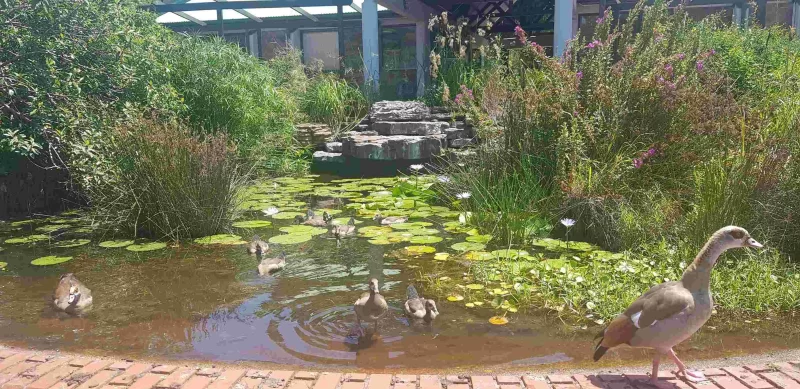
The City Nature Challenge global event runs worldwide on the last weekend of April.
This year’s Great Southern BioBlitz international event: 27-30 November. Four days, your estate, and whoever you can persuade to come along. The dates shift between September, October, and November so that cities in both winter- and summer-rainfall regions get a turn during their best season.
How does an estate resident’s photo actually help? Much of what grows in an estate garden was planted, and those records should be marked as cultivated. Search the naturally growing places: the green belt behind your house, a stream buffer, the rough on the seventh, the dune scrub between you and the beach. Photograph the pollinators living amongst the garden beds: insects, spiders, lizards, frogs. Lichens on the bark and paving are worth recording too. Record the weeds and invasives pushing through, because early detection matters enormously. Those observations catch invasions early and monitor species of conservation concern.
An observation that changed your perspective: Recording the organisms that emerge after dark and go unnoticed daily. I especially enjoy photographing spiders at night. Frogs are far easier to find, praying mantises sit motionless waiting for prey, and the variety of moths is extraordinary. All you need is a torch, patience, and a keen eye between the plants.
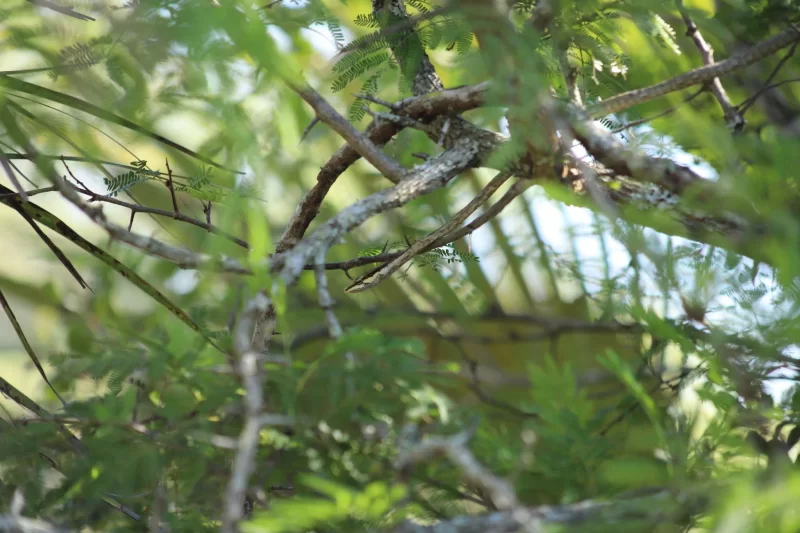
A story that made an impact: During this year’s City Nature Challenge, we explored Zululand. After a hot day surveying sand forest (a rare, ancient forest type found in the far north of KZN) at a community-owned site neighbouring Tembe Elephant Park. We’d been relaxing over lunch under a tree for a while when one of our group said there was a snake on the branch beside us. His eyes stayed fixed on it while the rest of us took several minutes to see anything at all: a twig snake, frozen and swaying gently, mimicking the branch it lay along. I photographed it and uploaded it that evening. It’s on iNaturalist now: a dated, mapped record of a snake that had been watching us eat lunch.
The KZN coastal belt is amongst the most transformed landscapes in South Africa, and the remnants that survived sugar cane and development are disproportionately inside estates. Hawaan Forest is eighty hectares of climax dune forest on an 18,000-year-old dune, protected since 1860, and it was once one of many such patches along this coast. Your estate may hold something similar. iNaturalist is how you find out what you're holding.
Getting Started
1. Download the iNaturalist app, register, and switch your location toggle on.
2. Photograph whatever you find, living or dead, capturing the features that would identify it.
3. Upload and see what the community says.
Taking a Useful Photo
Start wide, showing the whole organism and its surroundings: the rock, the host plant, the habitat. Then move closer for detail from as many angles as you can. Add something for scale: a fingertip, a pen, a ruler. Check the map pin is accurate before uploading. Then, if you like, describe what a photo can’t show: smell, texture, weather, behaviour.
A Note on Hiding Locations
iNaturalist automatically hides the precise location of species targeted by poachers or collectors, so you needn't do that yourself. You can also obscure your own observations if you'd rather your home address wasn't visible. Just be aware that obscured coordinates can't be retrieved by anyone but you, so the record can't be used for Red Listing, planning or research. The easy fix: join the two projects below and trust the curators with your coordinates. Your locations stay hidden publicly, but SANBI's Red List and research teams can still use them. And never set a location to “private”, as that removes the place entirely.
Estate Findings on iNaturalist
After several requests from estates wanting to track the wildlife on their doorstep, we set up an iNaturalist umbrella project for KZN's coastal residential estates. Each estate gets its own project, automatically gathering every observation made within its boundaries, and the umbrella project brings them all together so estates can see how they compare.
So far, Mount Edgecombe Country Club Estate Two leads with 4,560 observations, followed by Zimbali Estate at 3,205 and Hawaan Forest with 1,516. Simbithi Eco Estate and Mount Edgecombe Country Club Estate One also show strong numbers at 1,210 and 1,128 respectively.
On the KZN South Coast, Renishaw Precinct has reached 21,839 observations, and Widenham Retirement Village 4,923, proof of what a committed community can build. Having a low number doesn’t mean there’s less to find. It means nobody has looked yet.
An iNaturalist estate project gives you a verified, continuously updated species list for your property at no cost. It supports Environmental Management Plan reporting, shows which invasive alien species are establishing and where, so clearing budgets go to the right places, and documents which threatened species occur on your land. For estates marketing an eco-identity, it replaces claims with data anyone can check. It also gives residents something to do together. Adding your estate is simple: create a project using the estate's boundary, including any green belt around it, and we'll add it to the umbrella.
To join the Umbrella Project, explore other projects, or learn how to start your own estate project:
inaturalist.org/projects/kzn-coastal-residential-estates
Enjoyed this? See more from Estates Magazine in your Google results.

Written by
Elvida Sydney
As one of the in-house journalists, Elvida's unique voice and love for writing shine through in every article she works on.