The Invisible Mood Setter
How fragrance quietly rewires your day
 by
Mariska Moodley
· · 4 min read
by
Mariska Moodley
· · 4 min read
You feel it before you see it. You step into a room and, before your eyes have taken in a single detail, a feeling settles: calm, warmth, safety, and ease. That’s the quiet power of scent.
Smell is our most instinctive sense. It’s the only one connected directly to the parts of your brain that handle emotions and memories. That’s why the sharp, clean scent of eucalyptus can instantly clear your head and make you feel like you can breathe again, or why a trace of vanilla and coffee can make any kitchen feel like home. Scent doesn’t just add to the atmosphere. It creates it.
And in a world that feels increasingly anxious and overstimulated, we’ve all started consciously curating how our spaces smell.
The Language of Scent
Different scent families speak to us in very different emotional languages.
To Ground You: When your mind is racing, you want earthy, woody, deep scents that pull you back into your body. Think vetiver, sandalwood, and cedarwood. Smoky and rich, vetiver is often called the “oil of tranquillity”. Cedarwood feels like walking through a quiet forest. These are base notes that linger, slow your breathing, and make a room feel anchored.
To Comfort You: Soft, warm, and slightly sweet, vanilla is the ultimate soother, scientifically shown to reduce startle reflexes and stress. Amber, tonka bean, cinnamon, and sandalwood create that cashmere blanket feeling. Lavender, the most studied aromatherapy oil, sits right between grounding and comforting. It lowers heart rate and is famous for improving sleep quality.
To Lift You: Citrus is pure sunshine. Sweet orange, bergamot, grapefruit, and lemon are bright, clean, and instantly energising. They cut through brain fog and make a space feel clean and optimistic. Perfect for a morning kitchen or a work-from-home desk.
To Clear You: Eucalyptus, peppermint, rosemary, and tea tree are the deep breaths. They feel cool, open, and clarifying, like opening a window in your mind. Great for focus, for stuffy winter days, or for a shower ritual.
Oils, Candles & Diffusers
Part of the beauty of modern aromatherapy is that you can choose your ritual.
Essential oils are pure, concentrated plant extracts. One drop of peppermint oil contains the power of dozens of leaves. In aromatherapy, each has a profile: Lavender for calm and sleep, frankincense for meditative focus, ylang-ylang for easing anxiety, bergamot for joy. Used in a bath, on pulse points with a carrier oil, or in a diffuser, they are therapy in its most potent form.
Diffusers - especially ultrasonic and reed diffusers - have become the everyday workhorse. They break the oils into a fine mist and disperse them continuously without heat, preserving the therapeutic properties. They are waterless, flame-free, and effortless, which is why they live in bedrooms, offices, and yoga studios. They set a consistent, background mood.
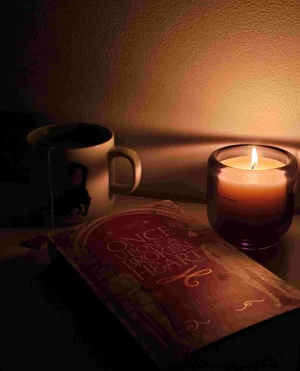
A candle is an experience, not just a scent. The soft flicker of a flame is calming in itself, and when paired with natural waxes and essential oil blends, it creates an intentional moment. Lighting a candle signals to your brain: “We are pausing now.” The scent throw is warmer and more intimate than a diffuser, ideal for an evening wind-down, a long bath, or a dinner table. Always check the necessary health and safety labels before lighting a candle.
Why Has It Become So Popular Now?
Aromatherapy isn’t new; it’s ancient Egyptian, Ayurvedic, and indigenous knowledge. But its recent rise in popularity makes complete sense.
First, we’re seeking control over our environment. We can’t control the news or the traffic, but we can control how our bedroom smells at 21:00 before bedtime.
Second, it’s a screen-free form of self-care. It asks nothing of you except to inhale. No app, subscription, or performance. Just a breath.
And it works because it bypasses logic. You don’t have to ‘believe’ lavender will relax you for your nervous system to respond. The molecules interact with receptors in your nose, influencing serotonin, cortisol, and heart rate. It’s wellness that is both deeply primal and beautifully simple.
In the end, scent is the most invisible form of decorating, but often the most memorable.
Enjoyed this? See more from Estates Magazine in your Google results.

Written by
Mariska Moodley
Bringing new perspectives and fresh ideas, Mariska's stories reflect her vibrant energy.
READ MORE

Making Sense of Your Levies
by Jacqueline Herbst · September 25, 2026

Nature-Led Living at Lalela
by Rainmaker Marketing · September 23, 2026

Coastal Farm-Style Estates are Emerging as the Next Property Trend, with the KZN South Coast on Track
by Justin Scott · August 19, 2026